
Curiosity
The world was enormous when I was five. Somehow, it has only gotten more interesting.

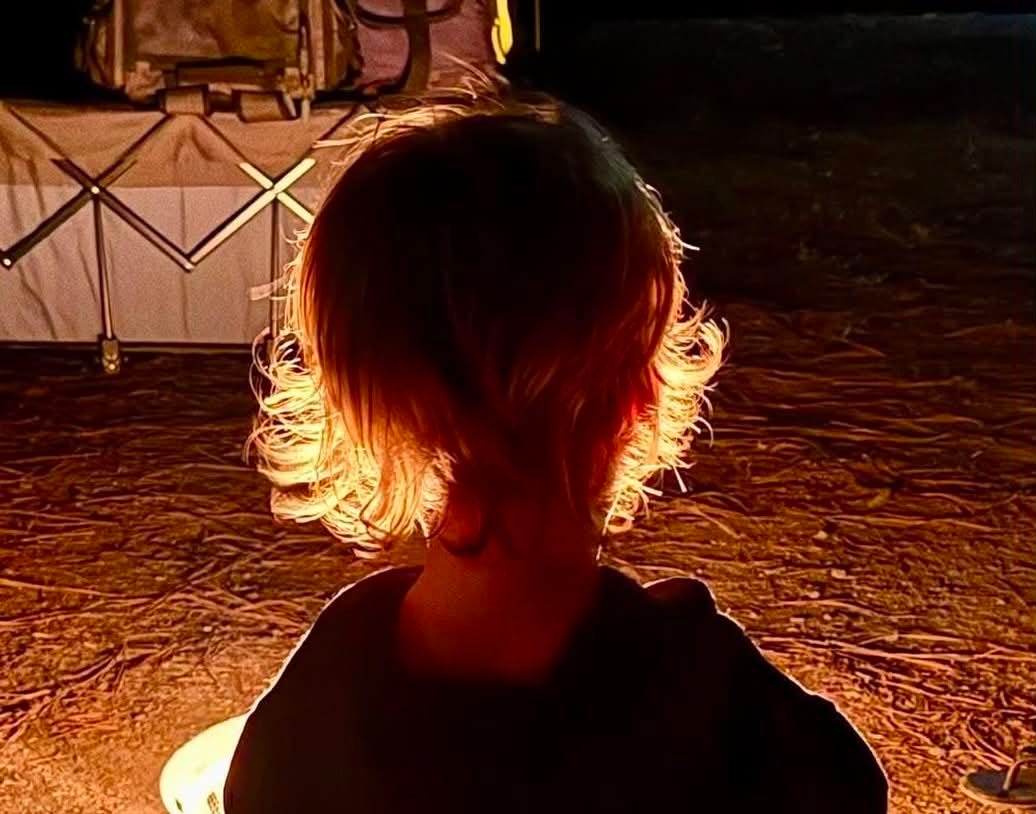
When I was in grade school, one of the things we learned was that if you wanted to write a factual paper, you needed to answer the five Ws: Who, What, Where, When and Why. Somewhere along the way, How was added to the list.
I remember being delighted by this. Not because I particularly loved writing factual papers, but because I suddenly realized there was a reason for the way my mind already worked. Apparently, there was a proper method for being curious.
Who? What? Where? When? Why? And how?
When I was a child, my curiosity was filled with wonder. The world seemed enormous, and there was so much of it I hadn’t seen yet.
When I was five, my father took our family on a road trip from Michigan, following the Niagara River and then down part of the Eastern Seaboard. I remember a hot, humid summer and six kids trying not to stick together in the back seat of our car. Niagara Falls was immense and chilly on a hot summer day, the roar so deafening we couldn’t hear ourselves laughing. We slowly made our way down to Boston and Cape Cod. One of the stops was a rather lackluster looking Plymouth Rock strangely lonely, surrounded by fences and dirt. I remember the smell of the ocean and damp wood, and the sound of creaking timbers as we toured Old Ironsides and the Mayflower. They looked so small to me. I endured my sister Gayle’s deep disdain as she was stuck babysitting me topside of Old Ironsides as I flatly refused to descend into the dark bowels of the ship.
The Mayflower especially fascinated me. I said, “People crossed the ocean in that?” I don’t remember what my father said. Maybe he explained that it was a replica. Maybe he told me about the Pilgrims. Maybe he simply smiled at my astonishment. I remember his deep rumble of laughter when I asked my mother, “Which pilgrims did you know?” As a five-year-old, I couldn’t have understood the logistics of such a journey. I didn’t know enough about navigation or shipbuilding or the history of the voyage. I simply looked at that little ship and tried to imagine being on it, sailing into an ocean so enormous that you couldn’t see where it ended. I remember thinking how small people were. And how brave they must have been.
I think that may have been one of my earliest encounters with history as something more than dates and names. History was made by people who were no larger or stronger or more certain than the people I knew. They were simply willing to venture into something they didn’t understand.
Perhaps that was the beginning of my understanding that history wasn’t really about dates and famous names. It was about people. And fortunately, I had two of them sitting right in front of me. My parents had lived through things I would later read about in history books... The Great Depression. World War II. John F. Kennedy’s assassination. The Civil Rights era. Watergate.
My mother was a storyteller. She told me about her father, who during the Depression, when customers couldn’t pay their bills with money, Grandpa Hempstead would let them pay with what they did have. “Food. Livestock. Whatever they could spare.” She told me about the family’s World War II Victory Garden. Those details made that era feel different to me. It wasn’t just a time of unemployment and economic collapse, of hardships on the homefront, printed in a textbook. It was a garden. It was a customer arriving without money but with something he could trade. It was a family figuring out how to get through another year.
I didn’t know then that I was listening to history. I thought I was listening to my mother.
I was simply a child asking questions. She was simply answering them. I couldn’t have known how precious those ordinary stories would become.
My father gave me another kind of history. During the 1960s, when a Black family moved into our upscale neighborhood, Daddy didn’t see it as a particularly remarkable event. When some of our neighbors questioned it, his answer was simple. “If they can afford the house, they’re welcome.”
He believed in the possibility of the American dream because he had personally lived a version of it. When Daddy was putting himself through college, it was just him, Mom and my sister Carol. He worked full time, went to night school on the GI Bill, and supported his young family. By the time our family grew, he had worked his way from a Teamster on a loading dock to an executive at Oldsmobile. His was a belief in the American way of working hard for a living and providing for your family. Green money didn’t know the color of the hand holding it.
I don’t remember having the vocabulary as a child to understand everything that surrounded those moments. I simply absorbed the stories. I didn’t know I was building a library inside myself. That may be one of the gifts of curiosity. You don’t always understand what you’re learning when you’re learning it. You tuck it away.
Years later, it becomes part of the way you see something else. I’ve always loved learning. I’ve also always loved teaching what I’ve learned. More than once I’ve been told I should have been a teacher. I probably would have been good at it. But, you know... Kids. Yeesh.
Instead, I became something of a collector of facts. My brain is packed with minutia. Historical details. Movie trivia. Odd bits of science. Names, dates, places, explanations for things I probably don’t actually need to know. But every once in a while, some obscure little fact I’ve been carrying around suddenly becomes useful. And I get a ridiculous amount of satisfaction from that.
Case in point... on a road trip last winter, I had the pleasure of seeing a snowbank start to vaporize. And, because I am apparently incapable of keeping an interesting fact to myself, I shared my discovery with everyone else in the car. “That’s sublimation,” I announced to the car with the stupidly pleased grin of someone who had just solved a very minor scientific mystery. Nobody was impressed. There were eye rolls. I was undeterred. I had just witnessed snow turn directly into vapor, and I knew the word for it and understood the process.
Perhaps that’s why learning has never really felt like work to me. I collect knowledge because I enjoy having it, even when I don’t know when I’ll need it. My curiosity has changed as I’ve grown older. When I was little, it was mostly wonder. I wanted to know what was over there, how something worked, why people did what they did.
Later, curiosity became a way of understanding. Now I find myself curious about an astonishing assortment of things. The Silk Road and the Tarim mummies. How to publish my own books. How silver jewelry is molded. Why a particular piece of furniture was made the way it was. What happened to an actor after a movie I watched decades ago.
There is no sensible curriculum. There doesn’t need to be. I no longer seek degrees or certificates. I’m not trying to pass a test or qualify for a job. I just want to know.
Maybe that is why I still think about that professor I had at university who was proud to carry a current student ID. He took classes every semester because he never wanted to become too old to learn. I found that inspirational then. I understand it now.
There is something wonderful about reaching an age when you can learn simply because something interests you. No grade. No credential. No practical application required.
Just curiosity.
I shared my curiosity with my children until they had finally had enough of their mother’s endless questions and assorted useless facts. When I took them out of school for the occasional dentist or doctor appointment, we rarely just went to the appointment. We’d make a day of it. Over the years, we visited Sutter’s Fort, wandered through the railroad museum, went to the zoo and art galleries, and packed brown-bag lunches to eat before the ballet.
I have no idea how much of it stuck. Maybe some of it did. Maybe they simply remember their mother turning a doctor’s appointment into an adventure.
Either way, I’m looking forward to doing it all again. This time with my grandson. He and I roar together when he presses the button for the dinosaur sound in one of his books. In another, we count little bumpy ladybugs. Right now, we start with “one, two, five, nine...” but we’re working on that.
I suppose I’ve been carrying that five-year-old girl with me all these years. She is still standing beside the Mayflower, still looking at something she doesn’t understand, still wondering how anyone could possibly have done that. Only now she has a much larger vocabulary. And a rather crowded brain. But she still wants to know.
Who? What? Where? When? Why? And, perhaps most importantly, how?
Loved this essay today! And what a gift—to have insatiable curiosity…